Key Takeaways
- ✓Las Vegas apartment vacancy rates remain below historical averages, supporting continued multifamily development demand.
- ✓The most active multifamily land corridors in 2026 include Henderson's southeast quadrant, the southwest valley, and the Summerlin periphery.
- ✓Entitled multifamily land — with approved density and design review — trades at a significant premium over raw sites.
- ✓Townhome and build-to-rent product has gained significant market share and is driving demand for smaller infill sites.
- ✓Water availability and NV Energy interconnection timelines are the two most common obstacles for new multifamily sites.
The Multifamily Case in Las Vegas
Las Vegas has been one of the fastest-growing metropolitan areas in the United States for most of the past two decades. Population growth, domestic in-migration from high-cost coastal markets, and a relatively young workforce have driven sustained demand for rental housing. Apartment vacancy rates in the valley have generally stayed below the national average, even as supply has increased significantly over the past several years.
That demand backdrop makes Las Vegas a fundamentally attractive market for multifamily development. But the specific sites where development pencils — and the corridors where land is available at prices that allow the numbers to work — have shifted meaningfully as land costs have risen and construction costs have remained elevated.
Active Corridors in 2026
Henderson's southeast quadrant — the area around the St. Rose Parkway corridor, Green Valley Ranch, and the emerging Union Village medical campus — remains one of the strongest multifamily corridors in the valley. Demand is driven by healthcare employment at the medical campus, proximity to the Galleria at Sunset retail node, and strong demographics. Entitled multifamily sites in this corridor are scarce and priced accordingly.
The southwest valley — particularly the Enterprise area and the Spring Valley corridor south of Tropicana — continues to attract multifamily developers drawn by freeway access, proximity to the Strip employment center, and relatively lower land costs compared to Henderson. The area has seen significant apartment deliveries over the past three years, but absorption has largely kept pace.
The Summerlin periphery — areas just east and south of the master-planned Summerlin community — is an emerging focus for multifamily land buyers who believe Summerlin's growth will push demand into adjacent unincorporated areas over the next five to ten years. Land prices here are lower than core Summerlin, but entitlement timelines can be longer due to general plan considerations.
North Las Vegas is attracting interest for workforce housing product, particularly around the North 5th Street corridor and areas near major employment centers. Land is more affordable here than in the southern valley, but income levels and rental rate ceilings require more conservative underwriting.
Build-to-Rent and Townhome Product
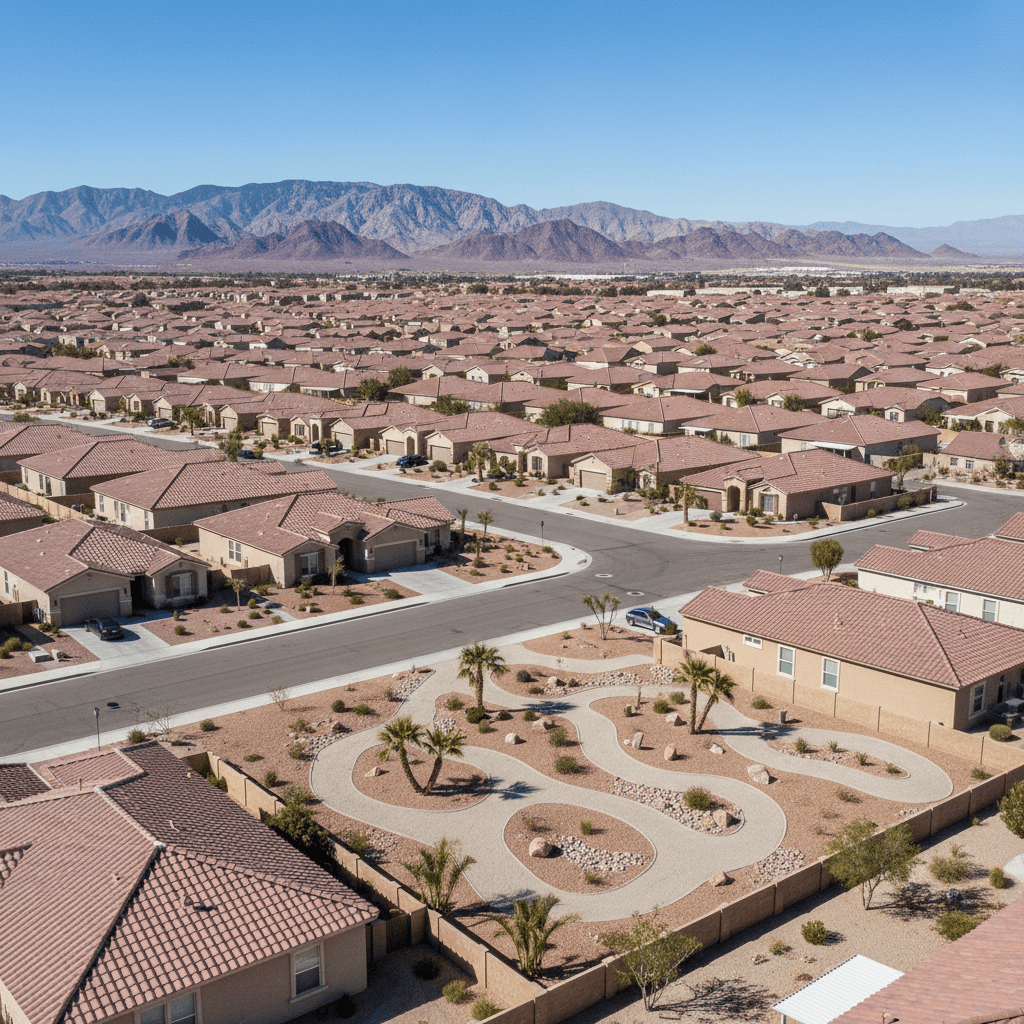
One of the most significant shifts in the Las Vegas multifamily land market over the past three years is the rise of build-to-rent (BTR) and townhome product. Single-family and townhome communities built specifically for the rental market have gained significant share from traditional garden-style apartments, driven by renter preference for more space, private outdoor areas, and suburban settings.
This shift has created demand for a different land profile than traditional multifamily. BTR communities need infill residential land that can accommodate attached or detached product at 8 to 15 units per acre — lower density than traditional apartments, but higher than traditional single-family subdivisions. Zoning that allows this density in desirable locations has become highly sought after.
Small infill sites — half an acre to three acres — that can support a townhome or small BTR development have attracted significant buyer interest from local and institutional developers alike. These sites are often overlooked by larger apartment developers focused on 200-plus unit projects, creating opportunity for buyers who can source them off-market.
Entitlement and the Density Question
For multifamily land, entitlement is everything. A site zoned for 12 units per acre and a site zoned for 40 units per acre may sit next to each other and look identical from the air, but they are fundamentally different assets with fundamentally different values.
The highest-value multifamily land in the Las Vegas Valley is land with approved high-density zoning, completed design review, and ready-to-pull building permits. Developers will pay a significant premium for that certainty. The lowest-value multifamily land is raw agricultural or low-density residential land that requires a full rezoning and design review process — a 12 to 24 month journey that carries real approval risk.
For land buyers looking to create value in the multifamily space, the opportunity is in identifying sites with reasonable entitlement paths — land currently zoned at lower density that has a realistic case for an upzone based on adjacent uses, general plan designations, and planning department appetite — and running those sites through the process before selling to a builder or developer.
Water and Power Constraints
The two most common obstacles for new multifamily sites in Las Vegas in 2026 are water availability and NV Energy interconnection timelines. The Southern Nevada Water Authority has been proactive about infrastructure planning, but specific corridors — particularly in rapidly developing areas — can have water capacity constraints that delay projects.
NV Energy interconnection — getting sufficient electrical service to support a large multifamily project — has become a meaningful issue as the grid has been stressed by data center development and residential growth. Developers have seen interconnection timelines stretch from months to years in some cases, and sites with confirmed power capacity are worth more than comparable sites without it.
Confirm both before you go under contract on any multifamily site.

About Parker Gibbons
Parker Gibbons is part of the PaperLotLand team. Parker Gibbons has been buying, selling, and brokering land in the Las Vegas Valley for over 15 years. He built PaperLotLand to give developers and investors a direct, off-market channel to move land — without the delays and exposure of the public MLS.
Learn more about us →Ready to Access Off-Market Land Deals?
Join our private network of developers, brokers, and investors in the Las Vegas Valley.